Understanding Loot Boxes and Microtransactions in Games
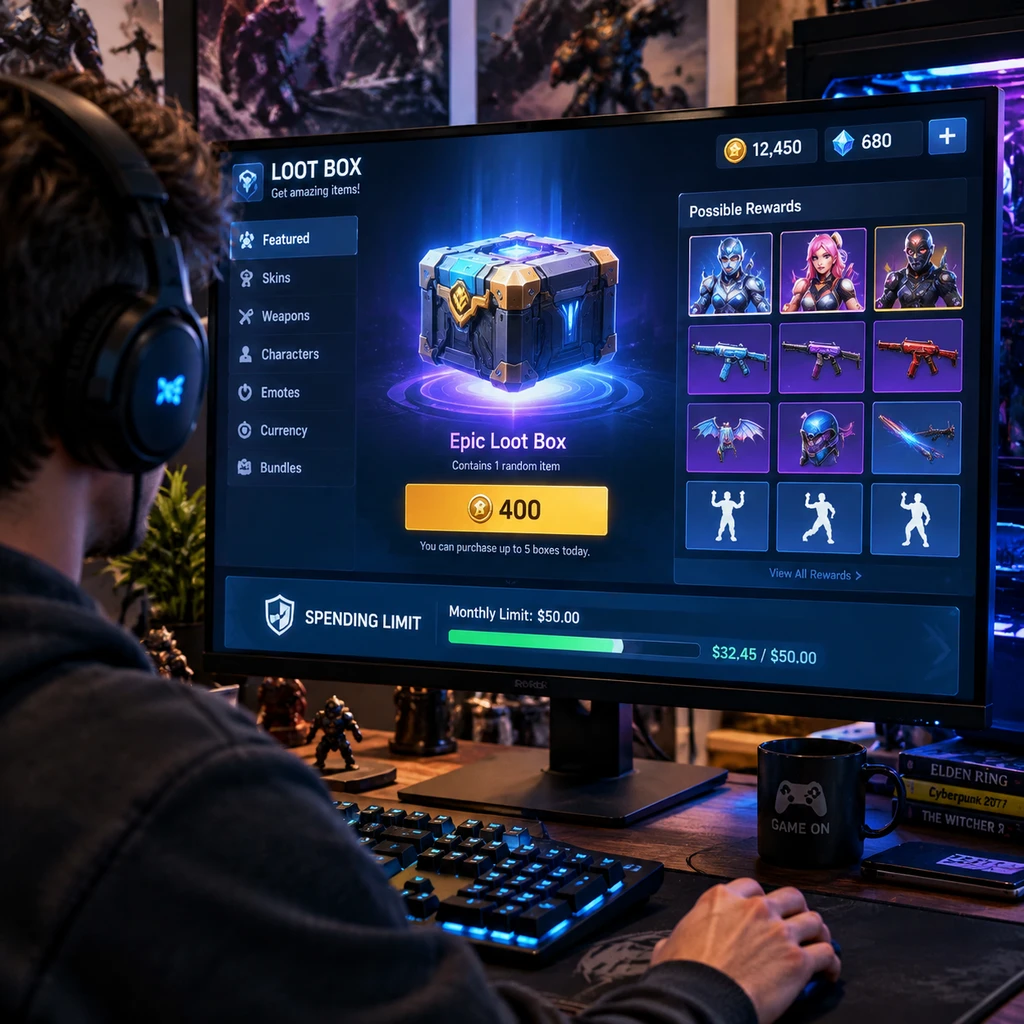
Loot boxes and microtransactions are common features in modern games, but they describe different things. Microtransactions are small or optional purchases made inside a game; loot boxes are one type of purchase that gives randomized rewards. Knowing whether a game offers a fixed-price item or a chance-based reward can help you decide what is worth buying and when to stop.
These systems can support free-to-play games and fund new content for paid games. They can also make total costs hard to track, especially when purchases use in-game currency instead of real money. A little preparation makes it easier to enjoy a game without spending more than intended.
What Are Microtransactions?
Microtransactions are optional purchases made within a game, usually with real money or virtual currency bought with real money. They can provide a specific item, extra content, or a chance at a randomized reward.
The word “micro” can be misleading: a single purchase may be inexpensive, but repeated purchases can add up. Common examples include character outfits, weapon skins, bonus currency, expansions, and season passes. Some games also sell convenience features, such as extra inventory space or faster progression.
Microtransactions are not automatically random. In a direct purchase, the player sees what an item costs and receives that item after buying it. With a loot box, the player pays for an uncertain result. That distinction matters: a $5 cosmetic purchase has a known price and outcome, while spending $5 on randomized rewards may not provide the item you want.
Games may charge through a platform store, a linked payment method, or in-game currency. When a title uses virtual currency, check how much real money a bundle costs and whether you must buy more currency than the item requires. Leftover balances can make later purchases feel less expensive than they are.
How Loot Boxes Work
Loot boxes are game items or purchases that award randomized rewards when opened. A box may contain cosmetic items, equipment, currency, or other rewards, and its exact contents are usually unknown beforehand.
Players might earn loot boxes through gameplay, purchase them directly, or buy keys or currency needed to open them. The details vary by game. Some boxes include only cosmetic items; others may offer equipment or upgrades that affect a character’s strength. The more a reward influences competition, the more important it is to consider whether the system creates a pay-to-win advantage.
Randomized rewards work on odds and probabilities. If a game says a rare item has a 1% chance per box, that is the chance for each opening, not a promise that one item will appear after 100 attempts. Each opening may be an independent event, unless the game clearly describes a guarantee or “pity” system. Even with a published probability, the result for an individual player remains uncertain.
Direct purchases offer certainty: you pay the listed price for a named item. Loot boxes trade that certainty for the possibility of receiving something rarer or more valuable. Before spending, look for the reward pool, drop rates, duplicate rules, and any limits or guarantees. If the information is hard to find, treat that uncertainty as part of the cost.
Common Types of In-Game Purchases
In-game purchases generally fall into a few categories: cosmetic items, additional content, progression passes, and gameplay advantages. Checking what a purchase changes helps distinguish appearance upgrades from items that affect play.
- Cosmetics: Skins, outfits, emotes, and visual effects change how a character or item looks. They are often direct purchases, though some games put cosmetics in loot boxes.
- Expansions and downloadable content: These add substantial content, such as story missions, maps, or playable characters. They usually have a clearly stated price and scope.
- Season passes and battle passes: These offer a set of rewards unlocked over a period of time, often through play. Check the end date, required playtime, and whether premium rewards remain available after the season.
- Virtual currency: Players buy bundles of in-game currency and spend it on items or services. Compare the bundle price with the real-money value of the purchase you want.
- Gameplay advantages: Items, boosts, or faster progression may affect competitive balance. Their impact ranges from minor convenience to a meaningful advantage over players who do not pay.
Categories can overlap. A battle pass might include cosmetics and experience boosts, while a game may sell the same cosmetic directly and through a randomized reward pool. Read what each offer contains rather than relying on its label.
Why Games Use These Systems
Game publishers use microtransactions to generate ongoing revenue, fund updates, or offer optional purchases alongside a game’s initial price. The model differs by title: a free-to-play game may rely heavily on optional spending, while a paid game may sell expansions or cosmetic items after launch.
For players, free-to-play games lower the cost of trying a game. Optional purchases can also support continued development and let players choose whether to spend. Cosmetic sales may be less disruptive to competition than paid equipment, though the experience still depends on how the game is designed.
There are trade-offs. Frequent store rotations, limited-time offers, premium currency, or progression systems tied to a deadline can create pressure to buy. A free-to-play title can cost nothing, but it can also become expensive if a player makes repeated purchases. Likewise, a paid game may offer good value through an expansion or charge for extras a player considers essential.
Judge the system by its actual effects: what content is available without paying, whether purchases change competitive outcomes, how clearly prices and odds are disclosed, and whether limited-time mechanics make spending feel urgent. The label “free-to-play” or “premium” alone does not tell you whether a purchase model is fair or good value.
What Players Should Consider Before Spending
Before spending, check the real-money cost, the exact reward, and whether the purchase affects gameplay. These three questions reveal most of the financial and fairness concerns behind loot boxes and other microtransactions.
Calculate the full cost
Translate virtual currency into dollars or your local currency. For example, if a currency bundle costs $10 and an item costs 1,200 units, check whether the bundle provides enough and how much currency will remain. Consider the total you have spent this month, not just the price shown on a single button.
Read the odds and reward rules
If you are considering a loot box, look for the published odds for each reward tier and item, where provided. Check whether duplicates are possible, whether duplicate items convert to currency, and whether there is a guaranteed reward after a set number of openings. A stated chance can help set expectations, but it cannot guarantee a desired result at a particular spend level.
Assess pay-to-win concerns
Pay-to-win describes purchases that give paying players a meaningful gameplay advantage. A cosmetic skin that changes appearance alone is generally not pay-to-win. A paid weapon, stat boost, or faster route to competitive equipment may be, especially if free players cannot reasonably earn an equivalent item through play.
One common mistake is treating a low price as harmless and repeating the purchase. Another is buying a loot box to chase a specific reward; the odds may make that item far more expensive than a direct purchase would be. Set a maximum in advance, and stop when you reach it rather than trying to recover money already spent. If the purchase only feels worthwhile when you win a rare item, it may not be worth making.
Practical Ways to Manage In-Game Spending
You can manage in-game spending by setting a budget, adding friction to purchases, and reviewing transactions regularly. These steps work for direct purchases, virtual currency, and randomized rewards.
- Set a monthly limit. Choose an amount that fits your entertainment budget after essential expenses. Treat it as a cap, not a target to use up.
- Decide what you want before opening the store. Compare the item’s real-money cost with other entertainment you could buy for the same amount. For loot boxes, do not spend money you would only consider worthwhile if a particular reward appears.
- Use platform controls. Turn on purchase confirmations, remove saved payment details if that helps, and use parental controls or account spending limits where available. Menu names and options differ between platforms.
- Track transactions. Check platform receipts and bank or card statements. Include currency bundles and subscriptions, not only individual items.
- Pause before limited-time offers. A short waiting period can help separate a genuine preference from pressure created by a countdown or rotating shop.
For families, agree on who can make purchases and whether an adult must approve them. Explain that virtual currency still represents real money, and review account settings together. Spending controls cannot make every offer transparent, but they can reduce accidental purchases and help keep gaming costs predictable.
Frequently Asked Questions
Loot boxes are only one form of microtransaction, and players can reduce risk by checking purchase details and setting limits. These answers address common questions about odds, cosmetics, and spending controls.
Are all microtransactions randomized?
No. Many microtransactions are direct purchases with a fixed price and a known item, such as a character skin or expansion. Loot boxes and similar systems are randomized, so the player does not know the exact reward before opening them.
Do loot boxes show their odds?
Some games display odds for loot boxes, while others may present details in a separate menu or not make them easy to find. Check the game’s reward information before spending, and remember that probabilities describe chances rather than guaranteed outcomes.
Are cosmetic purchases pay-to-win?
Usually, a purely cosmetic purchase does not provide a gameplay advantage. However, some items described as cosmetics may affect visibility or clarity in competitive play, so the effect depends on the game and the item.
How can I limit spending in games?
Set a budget, enable purchase confirmations or platform spending controls, and review receipts regularly. You can also remove saved payment methods and wait before buying limited-time offers. These habits make it easier to keep optional spending within a planned amount.